Chinese New Year began as a way to defend against Nian (meaning “Year”), a ferocious beast that emerged every New Year’s Eve to devour livestock, crops, and even people, according to popular legend. Villagers learned the Nian was terrified of the color red, bright lights, and loud noises. So, to frighten the beast, people began hanging red scrolls on doors, lighting torches, and “crackling” bamboo stalks in fire (the beginning of what is now fireworks). The celebration of the new year is still called Guo Nian in Chinese, which literally means “passing over” or “surviving” the Nian.
The earliest recorded observances were during the Shang Dynasty (c. 1600-1046 BC), where people began these ceremonies to frighten Nian. These ceremonies also typically marked the end of one planting cycle and the start of another. During the Han Dynasty (202 BC – 220 AD), Emperor Wu officially fixed the date to the first day of the first lunar month, thereby standardizing the Chinese calendar. Traditions such as cleaning the house (to sweep away bad luck) and staying up late (shousui) became common among the general public during the Wei and Jin dynasties (220–420 AD). In 1912, the Republic of China adopted the Gregorian calendar and renamed the lunar holiday the “Spring Festival” (Chunjie) to distinguish it from the Western New Year.
The Zodiac Animal System
The Chinese zodiac (shengxiao) is a 12-year cycle, with each year represented by a specific animal: Rat, Ox, Tiger, Rabbit, Dragon, Snake, Horse, Goat, Monkey, Rooster, Dog, and Pig. According to legend, the Jade Emperor organized a race across a river to determine the order of the zodiac. The clever Rat hitched a ride on the Ox’s back and jumped ahead at the last moment to claim first place, while the kind-hearted Pig arrived last after stopping to eat and nap along the way.
Each animal carries distinct personality traits and characteristics that are believed to influence people born in that year. For example, those born in the Year of the Dragon are thought to be confident and ambitious, while Rabbit years produce gentle and compassionate individuals. The zodiac operates on a 60-year cycle when combined with the five elements (Wood, Fire, Earth, Metal, and Water), creating combinations like “Fire Dragon” or “Water Tiger” that further refine the characteristics.
The concept of benming nian (本命年) refers to your zodiac year, which comes around every 12 years. Traditionally, this is considered an unlucky year requiring extra caution. Many people wear red clothing, especially red underwear, throughout their zodiac year to ward off misfortune, as red is believed to provide protection.
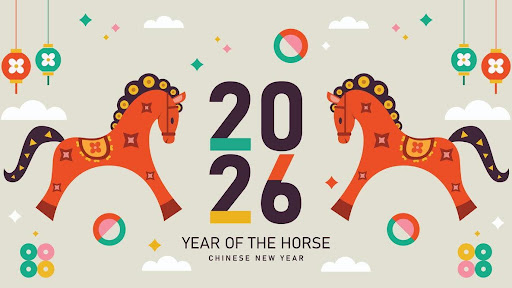
The year 2026, beginning on February 17, is the Year of the Fire Horse. Horses in the Chinese zodiac are associated with energy, independence, and a free-spirited nature. The Fire element adds passion, enthusiasm, and dynamism to these traits. Fire Horse years, which occur only once every 60 years, are considered particularly intense and are believed to bring significant changes and opportunities. People born in Fire Horse years are thought to be especially charismatic and strong-willed, though also potentially impulsive and restless. The last Fire Horse year was 1966, and the next won’t come again until 2086.